How Do Real-Time Demand Insights Improve Elective Course Bidding in Business Schools?
Live rankings and clearing prices let students bid on evidence. How real-time insights cut registration queries by 99% at OPJGU, NMIMS and IIM Calcutta.

The short answer: real-time demand insights let students see, while a bidding round is live, how competitive each elective is, where their bids rank and what it is taking to win a seat. They spend their bid points on evidence rather than guesswork, and far fewer of them question the outcome. The programme office knows the results the moment the round closes and can plan class delivery straight away. On Registro, a process that once took several weeks can be completed in a single day, in roughly two hours.
This article looks at what those insights are, how they change the way students bid, and what they give the programme office. For the basics of how bidding compares with other allocation methods, see what is elective course bidding.
Who takes part in elective bidding at a business school?
At business schools in India and globally, two kinds of programme usually draw on the same pool of electives:
- The two-year Post Graduate Programme in Management (PGP/MBA), with enrolments ranging from 200 to 1,000 students per batch.
- Executive MBA and specialised master's programmes, designed for working professionals and students seeking advanced professional skills.
Some schools also admit international exchange students each term. At IIM Bangalore, degree students and exchange students bid for electives in the same system. The larger and more mixed the cohort, the more students need to see what their peers are doing before they commit their points.
How does a course bidding round work?
Students are given bidding currency, or points, to take part. The programme office communicates the schedule and duration of each round, and students log into the Registro Course Bidding portal to bid for their preferred electives. Seats in each elective go to the highest bids.
The duration can be adjusted to suit the institution. An open round with a short time frame can run in about two hours. A closed round, where students do not see live demand, can span a couple of days.
What went wrong when students bid blind?
Traditionally, elective allocation was slow because registration was manual. The process took several weeks: bid results had to be validated and sorted, and the programme office then had to answer a long list of student queries about how the allocation was reached. The student experience suffered.
The deeper problem was that students had no feedback while bidding. Picture a student with a fixed budget of points who wants a popular strategy elective and two finance electives. Without any view of demand, they have two bad options. Put too many points on the strategy course and they may overpay for a seat they would have won cheaply, leaving too little for the finance electives. Put too few and they lose the seat altogether. Either way, they only find out when the results are published, and the programme office hears about it.
What insights do students see during a live round?
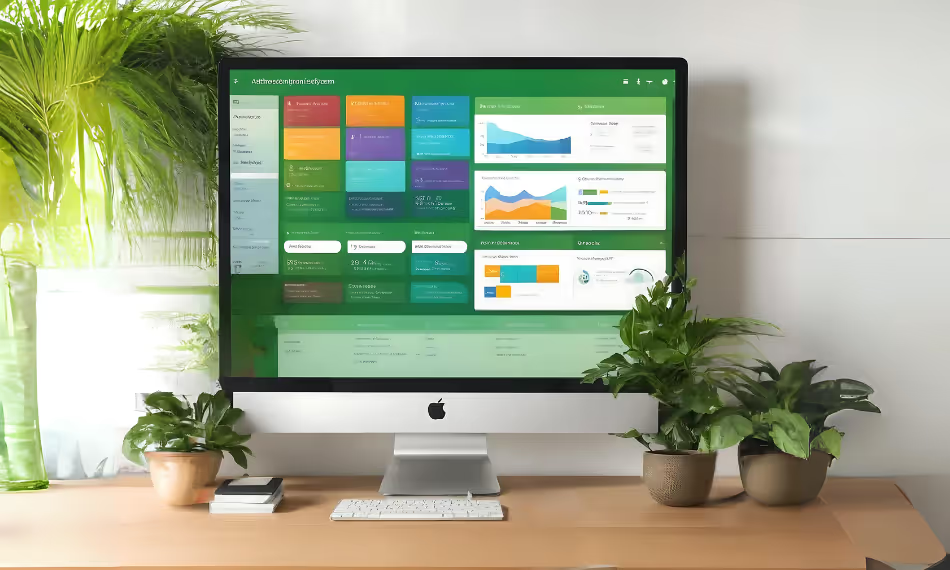
Registro Course Bidding gives students three kinds of real-time information while the round is open.
Live rankings
Students can see where their bid stands against others for each elective. If a bid is slipping below the cut-off, they know while there is still time to act.
Clearing-price visibility
Students can see the clearing price, the bid level it is currently taking to win a seat in each elective. This turns point allocation from a guess into a decision.
Instant confirmations
Each bid is confirmed immediately, so students are never left wondering whether the system recorded it.
Together these give each student a live picture of demand for electives across the enrolled cohort, not just their own choices.
How do these insights change the way students bid?
With live demand in front of them, students redistribute points as the round moves. They move points away from electives that are clearing low and towards those that are clearing high. They drop a course they cannot realistically win and switch to their next preference before the round closes, rather than discovering the loss afterwards.
Because every student sees the same information, the outcome is easier to accept. At OP Jindal Global University, students have complete visibility into the course allocation process. More than 5,000 students bid in a single real-time registration window across 10+ schools and 45+ programmes, manual effort for programme offices fell by 97% and student queries during registration fell by 99%. Read the OPJGU case study.
Students who want tactics for their own bidding can read how to succeed in your elective bidding round.
What does the programme office gain?
In an open round with a short time frame, outcomes are known to students and the administration at the same moment. That immediate feedback lets the programme office plan class delivery at once: final class sizes, sections, rooms and the timetable.
- Clashes caught during bidding: at NMIMS Mumbai, clash-free timetables are generated at the point of course bidding, so conflicts are detected and resolved before allocation, and students on waitlists move into available seats automatically. Read the NMIMS case study.
- Fewer queries, cycle after cycle: IIM Calcutta has run 21 term-level elective bidding cycles for 3,000+ students on Registro since 2017, with manual effort down 95%, student queries down 99% and student satisfaction consistently above 4.5 out of 5. Timetables are generated clash-free from bidding outcomes, which widens the range of electives students can take. Read the IIM Calcutta case study.
- Demand data for next term: every round shows which electives cleared high and which struggled, which feeds planning for the following term.
How does cross-programme bidding use demand data?
On average, about 15% of electives are undersubscribed in business school programmes with cohorts of over 400 students. Some of these courses are dropped, and the affected students have to choose other electives to meet their credit requirements.
Cross-programme bidding is one answer. At IIM Bangalore, students from multiple degree programmes and exchange students bid across programmes, with cross-programme seat allocation handled in one platform. The aim is to fill every seat in every elective: students from other programmes can take places in low-demand courses, which makes better use of faculty time and the course offering. Read the IIM Bangalore case study. For the two-round quota model, see how to conduct elective bidding across multiple graduate programmes.
"IIMB is extremely satisfied with the efficient support being provided by the EDTEX team during the Course Bidding rounds and while scheduling the term Timetable." Prof. Abhoy K. Ojha, Dean Programmes (2019), IIM Bangalore
Where do pre-bidding demand surveys fit?
Live insights help students during the round. A demand survey before the round helps the programme office avoid cancelling courses for low enrolment in the first place, by identifying low- and high-demand electives early enough to plan capacity and offerings across semesters. We cover this in detail in what business schools learn from an elective demand survey.
Frequently asked questions
What is a clearing price in course bidding?
The bid level it takes to win a seat in an elective. In a live round on Registro, students can see it and adjust their bids before the round closes.
Do real-time insights make bidding less fair?
No. Every student starts with the same rules and sees the same information, which is why open rounds tend to produce fewer disputes about allocation.
How long does an insights-driven bidding round take?
An open round can be completed in a single day, in roughly two hours. A closed round can run for a couple of days. The duration is set by the programme office.
Can exchange students bid alongside degree students?
Yes. At IIM Bangalore, degree students and international exchange students bid in the same system, with cross-programme seat sharing handled automatically.
What happens to students who miss a seat?
They can switch to another elective during the round, or join a waitlist. At NMIMS Mumbai, waitlisted students move into available seats automatically.
Related reading
- What is elective course bidding?
- FAQs on course bidding using Registro
- Video: the course bidding system
- Registro Course Bidding
To see live rankings and clearing-price visibility in a bidding round for your programmes, write to us at registro@edtex.in or request a demo.
Explore More Blogs



CIN: U74999TG2016PTC110546
GST: 36AABCW8421F1ZD
PAN: AABCW8421F