Why Is Real-Time Tracking on Day 0 and Day 1 So Critical? 3 Things That Can Go Wrong
Without real-time tracking, Day 0 and Day 1 placements break on scale, time and communication. IIT Bombay ran 900 students on Day 0 with zero clashes.

The short answer: real-time tracking matters on Day 0 and Day 1 because placement day moves faster than any manual process can follow. Without it, three things go wrong: the scale of interviews overwhelms the schedule, recruiters and students lose time to clashes and idle slots, and coordinators learn about delays and problems too late to fix them. With live tracking, IIT Bombay ran Day 0 for 900 students across 40 companies with zero interview clashes.
This article looks at why placement days are so hard to run, the three failure points, what live tracking shows the placement committee, and how institutions use it.
Why are Day 0 and Day 1 so hard to run?
On Day 0 and Day 1 of placements, anywhere from 10 to 60 companies interview 250 to 1,500 students. That means planning and running 200 to 2,000 interviews in a single day: 10+ companies, 100+ panels and hundreds to thousands of interviews, all happening at once. Every interview depends on the others. A student on several shortlists cannot be in several rooms at the same time, and every delay in one room pushes back the next.
Consider a typical Day 0 run on spreadsheets. The schedule is built the night before. By mid-morning, one company has added names to its shortlist, another company's panel is running late, and a student who has already accepted an offer is still listed for more interviews. The placement committee is holding it all together through phone calls and messaging groups. Nobody has a single view of where every student is, or what should happen next.
That is the gap real-time tracking closes.
What are the 3 things that could go wrong without real-time tracking?
1. The scale of operations overwhelms the schedule
Handling logistics for dozens of companies and a hundred or more panels works on paper only until the first change. When shortlists, panels and student availability are tracked by hand, errors multiply: students double-booked, panels waiting for candidates who are elsewhere, volunteers sent to the wrong room.
What prevents it: an automatic scheduling mechanism for Round 1, coupled with real-time tracking of students and the interview process. The schedule is generated from the actual shortlists and constraints, and every change shows up immediately rather than at the next manual update.
2. Recruiters' and students' time is wasted
The aim of placement day is to fit the maximum number of interactions, planned and unplanned, into a tight window. Scheduling has to respect student and recruiter preferences, and shortlists often arrive at the last minute, which calls for instant adjustments. Without live data, the schedule cannot keep up. Recruiters wait for students who are stuck in another interview. Students sit idle when they could be in a second-round slot.
What prevents it: scheduling automation with matching algorithms that generate multiple schedule iterations quickly, based on the real-time availability of students and interview panels. When a shortlist lands late, the schedule is rebuilt around it instead of patched by hand.
3. Stakeholders find out too late to act
Coordinators need to monitor interviews for delays, track student statuses and manage issues as they arise, in real time. If this information travels by word of mouth, it reaches the placement chair or the recruiter after the moment to intervene has passed. A panel that has been overrunning all morning is noticed only at lunch. A student who has left the process is still being called to rooms.
What prevents it: digital tracking of the entire interview execution process, so the right people see problems as they happen and can take corrective action while it still matters.
What does real-time tracking show the placement committee?
Digital tracking of interview execution gives coordinators critical insights, including:
- Interviews exceeding their panel durations.
- Delays in interview start times.
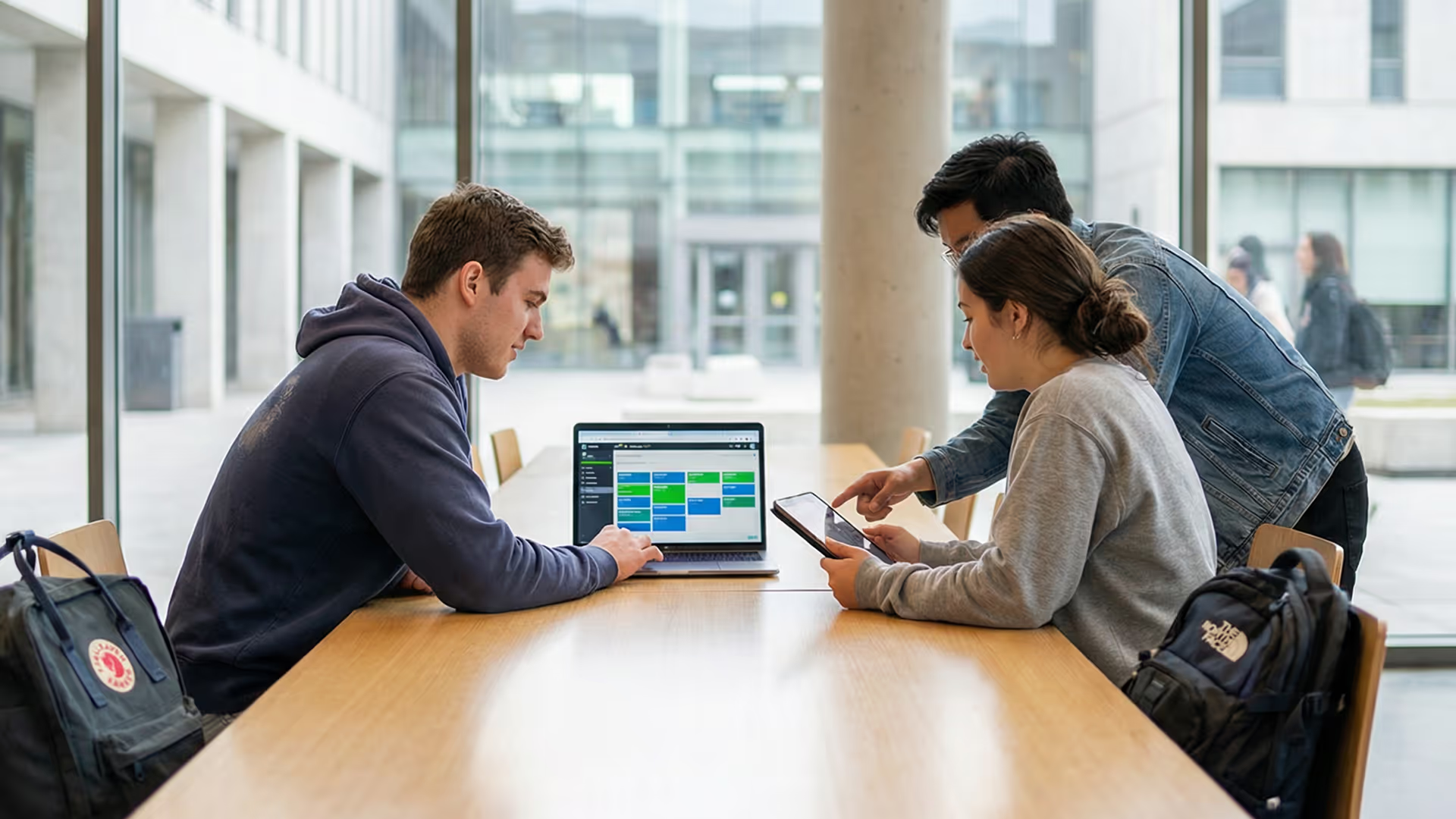
- The real-time status of every student: Scheduled, Interview In, In-Process, Interview Out, In-Pool, Not Available and so on.
- Students who have exited the process.
- Offers made and their details.
- Issues raised and how long they took to resolve.
Each of these maps to a decision. An overrunning panel means the next candidates need to be moved. A student marked In-Pool is free for an unplanned interview. A student who has exited the process should come off every remaining shortlist so panels are not left waiting. Granular tracking also shows where there is spare capacity, which makes it possible to schedule additional interviews during the day.
For the analytics a placement office should review across the whole season, not only on the day, see the key insights every placement committee needs.
How did IIT Bombay run Day 0 with zero clashes?
IIT Bombay deployed Skynet Scheduler to orchestrate Day 0 of its placement season. The scale was significant: approximately 900 students to be interviewed in a single day, up to 40 companies with shortlists ranging from 40 to 500 students each, and 200 volunteers to deploy across interview stations.
Before Skynet, the placement cell was dealing with manual scheduling that led to interview clashes, no real-time visibility into interview states or student progress, volunteers deployed without optimisation, and last-minute schedule changes that were unmanageable without a dynamic adjustment system. These are the same three failure points described above.
Skynet Scheduler addressed them with:
- Automated clash-free scheduling that factors in student preferences and per-company shortlist load.
- Dynamic schedule management with real-time controls at company and panel level, so adjustments could be made throughout the day.
- Real-time interview state tracking, with live status updates on students and interviews across all companies.
- Volunteer coordination, optimising deployment across interview stations to reduce wait times and confusion.
The result: 900 students interviewed on Day 0 with zero schedule clashes, 40 companies managed simultaneously, and 200 volunteers optimally deployed, with overwhelmingly positive feedback from students and recruiters. IIT Bombay has used Skynet for its virtual and hybrid placements since 2020. Read the IIT Bombay case study.
What are the benefits of scheduling automation and real-time tracking?
- Clash-free scheduling: automated workflows generate optimal schedules quickly, taking every constraint and the latest information into account.
- Better process insight: granular tracking of interview execution gives the committee the data to manage the day proactively, including room to schedule additional interviews.
- Better communication: custom data reports and multiple digital communication channels keep every stakeholder informed, so corrective action happens in time.
Skynet Scheduler is built for exactly this. It orchestrates Day 0 and Day 1 placement interviews and GDs across companies, panels and students in real time, balancing student preferences, interview load and company priorities.
Which institutions use real-time placement tracking?
Leading institutions in India, including IIM Ahmedabad, IIM Bangalore, ISB, XLRI, IIM Lucknow, IIM Kozhikode and IIT Bombay, have implemented these solutions. The Skynet placement automation platform has enabled some IIMs to complete their summer placement process within a day.
XLRI implemented Skynet in October 2018 to automate its Day placement process, replacing manual scheduling and student tracking with structured scheduling and real-time student tracking on one platform. When the pandemic moved placements online, XLRI ran its Summer Internship Process 100% virtually on Skynet. Read the XLRI case study.
"The implementation of Skynet at XLRI has been a tremendous success. The automation of our placement processes, coupled with the innovative virtual solutions provided during the pandemic, has significantly improved our ability to manage placements effectively." Prof. Rajiv Misra, Placement Chairperson, XLRI
Frequently asked questions
What happens on Day 0 and Day 1 of placements?
They are the opening days of the placement season, when dozens of companies interview hundreds of students simultaneously. They are among the most high-stakes operational challenges in campus recruitment.
What does real-time interview tracking mean?
Every interview and every student has a live status, such as Scheduled, Interview In, In-Process, Interview Out or In-Pool, which coordinators see as it changes rather than hearing about it afterwards.
Can the schedule change during the day?
Yes. Skynet Scheduler supports dynamic adjustments at company and panel level throughout the day, so late shortlists, overrunning panels and students exiting the process are handled as they happen.
Does Skynet Scheduler handle group discussions as well as interviews?
Yes. It orchestrates Day 0 and Day 1 interviews and GDs across companies, panels and students.
Does real-time tracking work for virtual and hybrid placements?
Yes. IIT Bombay has used Skynet for virtual and hybrid placements since 2020, and XLRI ran its Summer Internship Process fully virtually on Skynet.
Related reading
- 3 advantages of Skynet placement automation
- 7+ key insights every placement committee and office needs
- What placement challenges do students face without modern IT systems?
- Skynet Scheduler for Day 0 and Day 1
To see how real-time tracking would work on your institution's placement days, write to us at skynet@edtex.in or request a demo.
Explore More Blogs


CIN: U74999TG2016PTC110546
GST: 36AABCW8421F1ZD
PAN: AABCW8421F